Furthermore

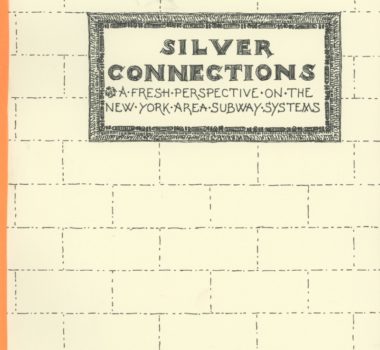
A publicity pamphlet for The Sunwise Turn Bookshop (image: Make It New: The Rise of Modernism)

In her September 1, 2011 New York Times essay, “A Portal to 1920s Greenwich Village,” Jennifer Schuessler discusses the new online exhibition from the Harry Ransom Center at the University of Texas at Austin entitled, “The Greenwich Village Bookshop Door: A Portal to Bohemia, 1920-1925.”  At the center of the exhibition is a door from Frank Shay’s 1920’s Greenwich Village bookshop that is covered with 244 signatures of the shop’s visitors.  It includes those of famous writers such as Theodore Dreiser, John Dos Passos, and Sinclair Lewis, as well as neighborhood eccentrics and unidentified book enthusiasts and reflects the lively literary world of 1920’s New York.  Shay “not only sold and published books, but ran a circulating library, lectured on bookselling, edited volumes of plays for other publishing houses, and even won a prize for his window displays. Most importantly, he cultivated a community: publishers, writers, artists, book collectors, magazine editors, cartoonists, academics, book designers, theater directors and more.”

Also at the Ransom Center, though not part of this exhibition, are the records of The Sunwise Turn Bookshop, purchased by the Ransom Center in 1977.  Sunwise Turn, founded and operated by Mary Mowbray-Clarke and Madge Jenison, was located in midtown Manhattan from 1916 until it closed in 1927 was concurrent with Shay’s shop.  One of the first bookstores in the U.S. to be owned by women, Sunwise Turn sponsored lectures by Robert Frost, Theodore Dreiser, and Amy Lowell among others.  It was the first “gallery” to exhibit the work of the painter Charles Burchfield among other new artists of the time, which perhaps influenced the artistic tastes of their young intern named Peggy Guggenheim.

Of the store’s interiors, Madge Jenison writes in her memoir Sunwise Turn: A Human Comedy of Bookselling that they “intended the room to look like a place in which you could read a book.  We were to conduct it like life, and it was to look like life.”  In the catalog for a past Ransom Center exhibition entitled “Make it New: The Rise of Modernism,” Edward Bishop explains that by lavishly decorating the interior of their store, the proprietors of Sunwise Turn were “creating a space for reading, not just buying books,” and that they “saw themselves as cultural missionaries in the capitalist jungle of Manhattan.”  Like Frank Shay, they also published books and worked hard to cultivate a literary community, but, in the end, the store was bought out by Doubleday and became part of the “jungle” it was fighting against.  Christopher Morley’s description of Shay’s store in his essay “Wine that Was Spilt in Haste” (1931) applies equally to its contemporary, Sunwise Turn:  It was too personal, too enchanting, too Bohemian a bookshop to survive indefinitely, but for five or six years it played a very real part in the creative life of New York.

Bishop, Ted. “The Sunwise Turn: The Modern Bookshop.” Make It New: The Rise of Modernism. Edited by Kurt Heinzelman. Austin, TX: University of Texas Press, 2004.

Harry Ransom Center.  “The Greenwich Village Bookshop Door: A Portal to Bohemia, 1920-1925.”  Accessed October 11, 2011.  http://research.hrc.utexas.edu/bookshopdoor/theshop.cfm#1

Jenison, Madge. Sunwise Turn: A Human Comedy of Bookselling. New York: E. P. Dutton & Company, 1923.

Schuessler, Jennifer. “A Portal to 1920s Greenwich Village.”  The New York Times. September 1, 2011.

This post originally appeared on 10/3/11.

Tags: , , ,

whalen 1The saying goes, “The more things change, the more they stay the same.”  This expression came to mind the other day as I was browsing in Housing Works Bookstore and came upon a book by Richard J. Whalen entitled A City Destroying Itself: An Angry View of New York.  Whalen, a native New Yorker, originally wrote a shorter piece on the same theme for Fortune Magazine that was so popular, he expanded the article to a book-length diatribe about all the myriad things he feels are destroying New York.  Written in 1965, it is noteworthy that the complaints he had then are the complaints we still hear today in 2013.

The opening of chapter 3 reads:

New York shows alarming signs of spiritual malnutrition and death-by-inches. It is frowning, tight-lipped, short-tempered, the most nervous city in America.  It is a city without grace.  It is humorless, able to mock and taunt, but too tense to gain the release of laughter.  It is a city that cried “Jump” to a would-be suicide perched on a window ledge.

Richard J. Whalen

Richard J. Whalen

I, too, am a native New Yorker, and I happen to disagree with Whalen here, but I have heard this sentiment expressed by countless others, although usually from those who were born and raised in other, more peaceful and bucolic, places where people are polite, even if they don’t mean it.

Whalen opens the book with:

All but a few years of my life have been spent in and around New York City, but I cannot claim an intense feeling of identification with the city.  In a sense, one is cheated by being born here.  The newcomer never entirely recovers from his stunning first impression, while the native becomes aware of the city gradually and without a thrill of wonder.

whalenPoint well taken.  I do find newcomers to New York have a strong reaction to it, whether negative or positive.  The excitement in the eyes of those whose lifelong dream it was to move to “The Big Apple” is almost blinding, whereas this is all I ever knew, I thought everyone grew up riding graffiti covered-subways and having year-round access to the world’s greatest museums.

Here is another refrain, oft heard, especially from old-time natives:

New York exists only in he present tense.  Just as there is no sense of obligation to the future, so there is no feeling of pride in the past.  Although Manhattan is quite old—it was first settled in 1615—is, as Alexander Woollcott once remarked, “a town without any attics.”  The city seems to regard the past with contempt and hastens to obliterate its heritage.

In 1965, the Landmarks Preservation Commission New York was a newly established institution, and was born too late to save the old Penn Station:

Symbolic of New York’s self-destructive frenzy is the demolition of Pennsylvania Station. Now being razed to make way of a $120 million complex including a new Madison Square Garden arena, an exhibition hall, bowling alleys, and a thirty-three-story office tower.  This will be the fourth Madison Square Garden in eighty-five years.  There will never be another Penn Station.

I wonder what Whalen would have to say about our city’s current plans for Moynihan Station, an attempt to harken back to a time when trains arrived in terminals both grand and central.

What fun I had perusing this volume of complaints and criticisms that also contains thirteen illustrations by Feliks Topolski.  The jacket copy declares, “Here is a city of endless human discomfort, inconvenience, harassment and fear…one which strives and dehumanizes its inhabitants…a city destroying itself.”  Though obviously rather one-sided, Whalen’s prose is very readable and his arguments astute.  Had he been writing today, he would have made a first-rate blogger!

Whalen, Richard J. A City Destroying Itself: An Angry View of New York. New York: Morrow, 1965.


Tags: , ,

The Stone Bridge, from The Manual of the Corporation of the City of New York (1865)

The Stone Bridge, from The Manual of the Corporation of the City of New York (1865)

One of the many perks of working at New York Bound Books is that I get to pore through lots of rare books about New York, for research and just for fun.  I recently photographed a few for our catalog that included several image of old SoHo, and when I say old, I do not mean when Dean and Deluca on Prince Street old, I mean when Canal Street was a canal old.

Title Page of the Valentine Manual 1865

Title Page of the Valentine Manual 1865

The first image, of the Stone Bridge (see above) in 1800, is from the 1865 edition of the Valentine Manuals.  Officially titled The Manual of the Corporation of the City of New York, this series of books was commonly called the “Valentine’s Manuals” for David T. Valentine, the clerk of the Common Council who compiled the volumes that included the city’s annual reports and directories. (read more about Valentine Manuals here at New York Bound Books).

A little research produced an article entitled “The Old Stone Bridge at Canal-street and Broadway” by Capt. Walker Bicker in The New York Times about his memories of  the bridge and its environs in the early 19th century, published April 9, 1886:

Broadway was not paved beyond “the stone bridge” which stood where Canal-street now crosses Broadway.  This was a famous resort for us schoolboys.  It was considered “out of town”—all north beyond as well as the immediate vicinity was country, post and rail fences dividing the land into different sized parcels.  This bridge spanned a small stream which conveyed water from the Collect on the east side of Broadway (where now stands the Tombs) to the west side, where was an extensive meadow covering most of the ground from Broadway to the north River and from Lispenard-street to Spring-street.

Here’s another image of Broadway, just one block to the north, in 1824.

Corner of Broadway and Grand Street, 1824 from The Manual of the Corporation of the City of New York (1865)

Corner of Broadway and Grand Street, 1824 from The Manual of the Corporation of the City of New York (1865)

Perhaps even more enlightening than the Valentine Manuals is Edward W. Browning’s New York Real Estate Brochure that lists buildings, apartments, apartment hotels, tenements, and stores to be sold at public auction on June 17, 1929.

Edward W. Browning’s New York Real Estate Brochure

Edward W. Browning’s New York Real Estate Brochure


513-519 Broadway through to 84 to 94 Mercer Street from Edward W. Browning’s New York Real Estate Brochure

513-519 Broadway through to 84 to 94 Mercer Street from Edward W. Browning’s New York Real Estate Brochure


This brochure contains a lot for sale at “513-519 Broadway through to 84 to 94 Mercer Street,” a plot that contains three buildings on Broadway, two of which go all the way through to Mercer Street, that would bring in an estimated whopping $80,700.00 in rent when fully occupied, presumably annually.  I found a recent article on Curbed about a unit in this lot for rent today:

Hank Azaria, best known for doing his voices on “The Simpsons” (Moe, Apu, Chief Wiggum among others), told the Wall Street Journal that he’s renting out his loft at 84 Mercer Street for a cool $16,000 per month. For that moolah you get a 4,000 square foot loft with 3 bedrooms. He picked the place up from photographer and director Cindy Sherman for $4.25M back in 2005, but he plans to spend a lot more time on the West Coast.

If a renter will pay $16K per month for a loft, imagine how much one of those retail spaces fetches!  I pride myself on being pretty good at math, but I’m not even going to attempt to figure out the percentage of appreciation between 1929 and 2011.  (And I don’t know if Azaria is BEST known for his Simpsons voices, fantastic though they are.)

Last, but not at all least, here is a newspaper clipping from February 9, 1907 of a picture of The Hall of Science, “where the freethinkers foregathered seventy-five years ago.”

hall-of-sciencebway-central-hotel

This building on Broome Street (probably between Mott and Elizabeth)  was purchased for $7,000 by educational reformer Frances Wright in 1829. According to the Encyclopedia.com entry on Wright:

Commencing a career as a lecturer, she bought a Baptist church and renamed it the Hall of Science, housing a lecture hall, a secular Sunday school, and a bookstore for free-thinkers. Wright’s lectures challenged evolving concepts of domestic ideology when she explained the experience and ideals of Nashoba, criticized evangelical revivals, and advocated education and equal rights for women. Her favorite topic was educational reform. She proposed a “guardianship system” through which state government would establish district boarding schools, where Americans could be raised for social equality through a curriculum that instructed all children in free inquiry and the physical sciences. Wright found admirers in New York among the reformers and artisans who comprised the city’s Workingmen’s Party and who also advocated enlightened public education and such issues as the ten-hour workday, abolition of imprisonment for debt, and attacks on the privileges of banks and capitalists.

Three random items.  Three SoHo locales.  Three interesting stories.  All in a day’s work.


This post originally appeared on The SoHo Memory Project on December 12, 2012.

Tags: , ,

Memories of Manhattan in the Sixties and Seventies by Charles T. Harris

Memories of Manhattan in the Sixties and Seventies by Charles T. Harris

When I first picked up the book Memories of Manhattan in the Sixties and Seventies, I thought to myself, oh goody, a memoir about the New York of my childhood.  I opened the book, and to my surprise and delight, this catalog of memories, written by Charles Townsend Harris, is a look back not on the twentieth century, but on the 1860′s and 1870′s.  I perused the pages of Townsend’s recollections as I sat in the New York Bound Books office here in Greenwich Village and read about the neighborhood’s origins:

I was born in the erstwhile village which in its earliest days was separated from the main city by Lispenard Meadows.  People in the early part of the last century visiting Greenwich literally went into the country, as the village was truly a rural settlement.

By the 1860′s and 70′s, however, New York had become a newly bustling metropolis, as Barbara Cohen writes in her post on 1850′s New York:

As New York City left the 1850′s behind, the nation entered into the bloodiest war in its history.  Although the battlefields were in the south, the Civil War exacerbated class tensions, culminating in the infamous Draft Riots in 1863, and left a lasting impact on life in the city.  The seeds of transformation, from a seaport town to an international metropolis in the decades leading up to the war, however, could never be unsown, and New York continued its meteoric rise, despite domestic conflict, to become the epicenter of the Western world.

Grand Central Depot, from Memories of Manhattan

Grand Central Depot, from Memories of Manhattan

Read the rest of this entry »

Tags: , , ,

designing tomorrow bookDesigning Tomorrow: America’s World’s Fairs of the 1930s at the Museum of the City of New York is an exhibition about yesterday’s visions of the future.  Through the lens of six fairs, Chicago (1933/34), San Diego (1935/36), Dallas (1936), Cleveland (1936/37), San Francisco (1939/40), and New York (1939/40), we see what depression-era Americans imagined their nation would look like in the years to come, when financial hardships were overcome and prosperity once again reigned over our land.

Many of these dreams became realities, the spread of highways leading to outward suburban sprawl as well as the upward reach of skyscrapers that allowed Americans to live and work in the sky.  Modern conveniences such has toasters, washing machines, and televisions, introduced at the fairs, became everyday household items.  This exhibition, which originated at the National Building Museum in Washington DC, shows an optimism at odds with the general tone of its era but is characteristic of the ambition Americans have shown in hard times. Read the rest of this entry »

Tags: , , ,

A drawing titled “The Genius of Advertising” from an 1880 issue of the National Police Gazette shows men outside a brothel gazing at pictures of some of the attractions awaiting them inside (photo via The New York Times)

A drawing titled “The Genius of Advertising” from an 1880 issue of the National Police Gazette shows men outside a brothel gazing at pictures of some of the attractions awaiting them inside (photo via The New York Times)

During the early 1800′s, the posh shopping and dining neighborhood in downtown Manhattan called SoHo (which stands for SOuth of HOston), enjoyed  its previous heyday as a commercial destination for well-to-do New Yorkers.  By mid-century, however, while Broadway around Prince and Spring Streets remained for some time the “Fifth Avenue” of its day, bordellos began popping up on side streets, and the area soon became New York’s first red light district: Read the rest of this entry »

Tags: , , , ,

A drawing by F. O. C. Darley published in Harper’s Weekly on January 1, 1859 (image and text: HarpWeek via The New York Times) The caption for this untitled cartoon reads: Mrs. Pegu, and drawing-room, are all laid out in state to receive New Year’s calls. Thirty-two young gentlemen make a brief appearance at the door, and recite the following shibboleth: “How d’ye do, Mrs. Pegu. Happy New Year. Can’t stay a minute. Made seventy-six calls this morning; got thirty more to make. Adoo! Adoo!” The young gentlemen vanish, to be succeeded by others.

Although I’ve lived in New York City my entire life, I have never been to Times Square on New Year’s eve.  The idea of standing out in the cold with close to a million others to ring in the new year sounds dreadfully exhausting to me, but perhaps not quite as exhausting as the old New Year’s tradition of “calling” or “visiting.”

In 1907, Adolph Ochs, publisher of the New York Times, dropped the first illuminated ball from the flagpole on the recently constructed New York Times Building that was located in the newly renamed Times Square and started a tradition that would last over a century.  Predating this tradition, according to The New York Times Learning Network’s On This Day, nineteenth century New Yorkers practiced another ritual that seems to have been long forgotten:

New Year’s Day was traditionally considered the best time of the year for renewing, reviving, or reaffirming friendships. During the nineteenth century, it was the custom of urban gentlemen to pay formal visits to the households of friends and relatives on that holiday. Gentlemen were expected to dress appropriately in morning costume, consisting of a dark coat, vest and tie, dark or light pants, and somber-colored gloves. Receiving the gentlemen callers were the ladies of the house, dressed in their sartorial finery or, occasionally, in the costume of famous female figures in history or myth.

Read the rest of this entry »

Tags: , , ,

The following is an excerpt from an article by Sibyl McCormac Groff entitled “Gothamtide: Words and Images in Nineteenth Century New York,” that first appeared in Antiques magazine.

New Yorkers have long promoted the Christmas season, or Gothamtide as I like to call it, which begins in early December and lasts until the twelfth day after Christmas, or January 6. While Christmas day was not declared a national holiday by the United States Congress until 1870, it was recognized as a holiday in New York State in 1849. New York’s prosperous ports (enhanced by the opening of the Erie Canal in 1825), the development of the transcontinental railroad system, and the rise of industry and commerce led to an increase in the number of immigrants settling in New York City, and the emergence of the family-centered middle class. Read the rest of this entry »

Tags: , , , ,

On October 27, 1904, New York City’s subway system was born with the opening of the Interborough Rapid Transit (IRT).  In celebration of this event, a commemorative book entitled Interborough Rapid Transit: The New York Subway—Its Construction and Equipment, in an edition limited to 200 copies, was distributed to high-ranking guests.  This illustrated volume details the construction of the subway tunnel, considered to be the first subway line in New York.

That it was the first subway line  is almost true.  Although the IRT was the first line in our current subway system, decades before it opened, there was another subway tunnel that ran under lower Broadway from Warren to Murray Street that was operated by the Beach Pneumatic Transit Company.  Yes, you read that correctly.  New York’s very first subway ran, not on electrical power as it does today, but on wind power through a pneumatic tube. Read the rest of this entry »

Tags: , , ,

“Robert Moses Astride New York” is a musical-in-progress by Gary S. Fagin (image: Curbed)

I was recently reading about composer, Gary Fagin, who is working on a musical called “Robert Moses Astride New York.” A musical about Robert Moses?  Really?  What will they think of next? A musical about the newsboys strike of 1899?   Been there.  A musical about the Atlantic Yards?  Done that.  A musical about Fiorello LaGuardia?  Old news.

It turns out that people and events in New York City history, no matter how unromantic, no matter how un-musical they might seem, have been the subject of many a musical interpretation.  One of these shows even won a Pulitzer Prize and a Tony Award.

“Fiorello!” is a musical about New York City mayor Fiorello H. LaGuardia (1882-1947), who took on and beat down Tammany Hall. The book is by Jerome Weidman and George Abbott, with lyrics by Sheldon Harnick, and music by Jerry Bock. It is one of only eight musicals to win the Pulitzer Prize for Drama, ever, and it also won a Tony award for Best Musical, beating out “Gypsy” and sharing first place honors with “The Sound of Music” in 1959. Read the rest of this entry »

Tags: , , , ,

« Older entries